

Air fryer duck breast is a delicious way to enjoy tender, juicy meat with beautifully crispy skin. Although duck might seem like a restaurant-only dish, it is surprisingly easy to prepare at home using an air fryer. With just a few simple ingredients and the right cooking technique, you can make an impressive meal without spending hours in the kitchen.
The secret to delicious air fryer duck breast is preparing the skin properly, allowing the excess fat to render, and checking the internal temperature to make sure the meat is cooked safely. The result is rich, flavourful duck with golden, crispy skin and a tender centre.
This recipe is perfect for a special dinner, a weekend meal, or whenever you want something a little different from your usual chicken or beef recipes. Serve it with roasted potatoes, vegetables, or a fruity sauce for a restaurant-style meal at home.
Where to Buy Duck Breast
Duck breast is available in several places, although it may not be as easy to find as chicken breast. Depending on where you live, you can usually find it in supermarkets, specialist butcher shops, or online meat stores.
1. Supermarkets
Some large supermarkets stock fresh or frozen duck breast, particularly in the poultry section or the premium meat section. You may also find it more frequently during the autumn and winter holidays.
Check the packaging carefully to see whether the duck breast is skin-on or skinless. For this air fryer recipe, skin-on duck breast is the best choice because the skin can become deliciously crispy when cooked correctly.
2. Local Butcher Shops
A local butcher is an excellent place to look for duck breast. Butchers who specialise in poultry or premium meats may offer fresh duck breast and can sometimes order it for you.
Ask for duck breasts with the skin attached and, if possible, similar sizes so they cook more evenly.
3. Farmers’ Markets and Poultry Farms
In some areas, local poultry farms and farmers’ markets sell fresh duck meat. Buying directly from a producer may give you more information about how the duck was raised and how recently the meat was prepared.
Availability depends on your location and the season.
4. Online Meat Retailers
Online butchers and specialist meat retailers often sell fresh or frozen duck breast. This can be a convenient option if your local shops do not carry it.
When ordering online, check the delivery conditions, storage instructions, product weight, and whether the duck arrives chilled or frozen. Keep it refrigerated or frozen according to the package directions.
How to Choose the Best Duck Breast
For the best results, look for duck breasts that have:
- Intact skin: This helps create a crisp, golden finish.
- Even thickness: Similar-sized pieces are easier to cook consistently.
- Fresh appearance: The meat should look normal for the product, without unusual discolouration or an unpleasant smell.
- Clear storage instructions: Choose a product that has been handled and stored correctly.
If you buy frozen duck breast, thaw it safely in the refrigerator before cooking. Avoid leaving raw duck on the kitchen counter to thaw.
How to Cook Duck Breast in Air Fryer
Cooking duck breast in an air fryer is straightforward, but there is one important difference between duck breast and many other meats: the skin contains a considerable amount of fat.
Scoring the skin and starting with a suitable temperature helps the fat render and encourages the skin to become crisp. The exact cooking time depends on the thickness of the breast, your air fryer model, and whether the meat starts cold or at room temperature.
Ingredients
- 2 skin-on duck breasts, approximately 6–8 ounces (170–225 g) each
- ½ teaspoon salt, or to taste
- ¼ teaspoon black pepper
- ½ teaspoon garlic powder, optional
- ½ teaspoon dried thyme or rosemary, optional
You do not need much oil because duck skin naturally releases fat during cooking.
Equipment
- Air fryer
- Sharp knife
- Kitchen tongs
- Meat thermometer
- Paper towels
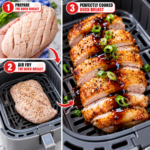
Step 1: Prepare the Duck Breast
If your duck breast is frozen, thaw it completely in the refrigerator before cooking.
Remove the duck breasts from their packaging and pat them dry with paper towels. Dry skin is an important first step towards a crispy finish.
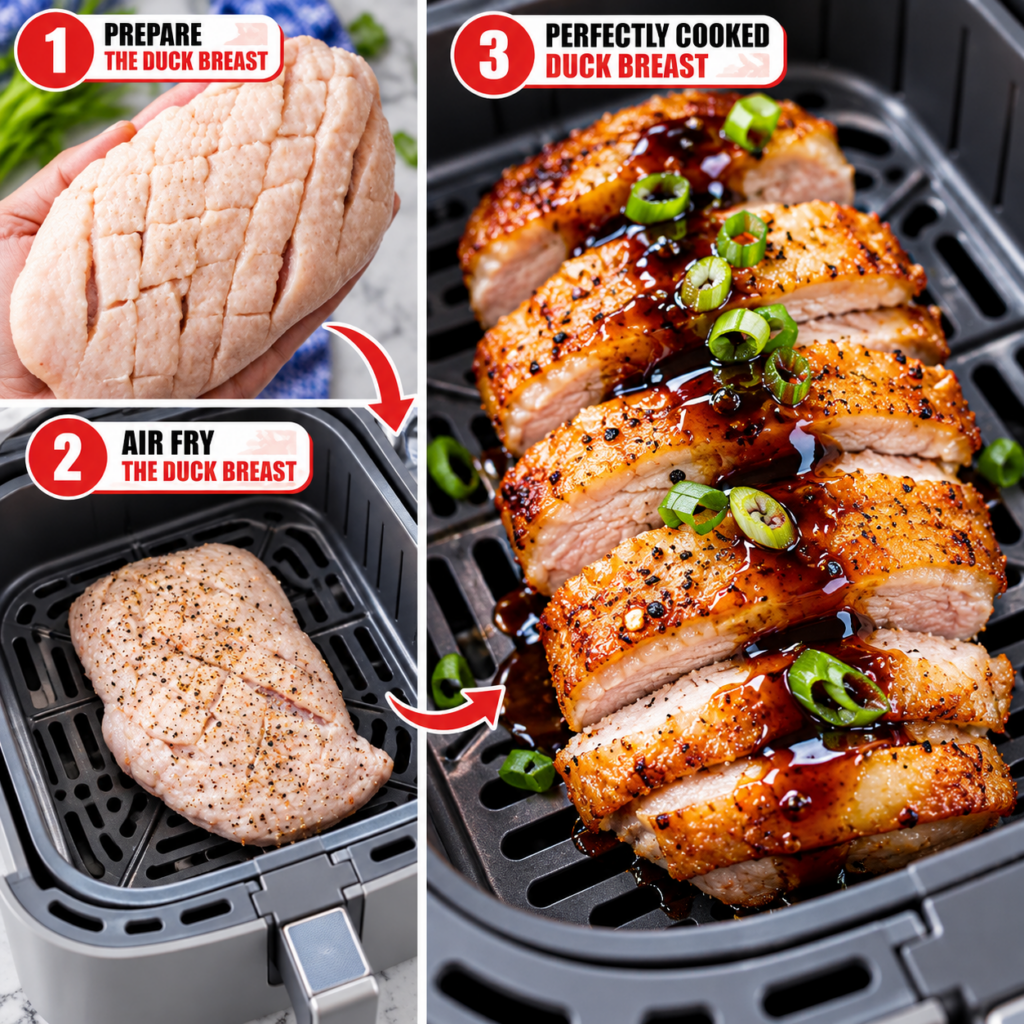
Using a sharp knife, carefully score the skin in a crosshatch pattern. Make shallow cuts through the skin and fat without cutting deeply into the meat. This allows some of the fat to escape during cooking.
Season both sides with salt and black pepper. Add garlic powder, thyme, or rosemary if you want extra flavour.
Step 2: Preheat the Air Fryer
Preheat your air fryer to 350°F (180°C) if your model’s instructions recommend preheating.
A moderate temperature helps the fat render without immediately over-browning the skin. Some air fryers run hotter than others, so use the cooking time as a guide rather than a guarantee.
Step 3: Arrange the Duck Breast
Place the duck breasts in the air fryer basket with the skin facing up. Leave space between them so hot air can circulate.
Avoid overcrowding the basket. If you are cooking several breasts, prepare them in batches if necessary.
Because duck releases fat, check your appliance’s instructions for handling fatty foods. Do not allow accumulated fat to reach the heating element, and never pour excess hot fat down the sink.
Step 4: Air Fry the Duck Breast
Cook the duck breasts at 350°F (180°C) for approximately 15–22 minutes, depending on their thickness and your air fryer.
Begin checking the temperature before the end of the estimated cooking time. If the skin needs more colour, you can finish with a brief increase to around 390°F (200°C), watching closely to prevent burning.
The duck is not ready simply because the skin looks brown. The safest way to check doneness is with a food thermometer inserted into the thickest part of the meat.
For food safety, cook duck breast to an internal temperature of 165°F (74°C). If you are cooking for someone at higher risk from foodborne illness, follow this safety temperature particularly carefully.
Step 5: Rest Before Slicing
Transfer the cooked duck breast to a clean plate and allow it to rest for about 5 minutes before slicing.
Resting gives the juices time to settle and makes the meat easier to slice neatly. Cut across the grain into thin slices and serve immediately.
Tips for Crispy Air Fryer Duck Breast
Dry the skin thoroughly. Moisture can prevent the skin from crisping properly.
Score carefully. Cut through the skin and fat, not deep into the meat.
Avoid adding too much oil. Duck skin releases its own fat, so extra oil is usually unnecessary.
Keep the basket uncrowded. Good airflow encourages more even cooking.
Use a thermometer. Cooking times vary between air fryer models and duck breast sizes.
Watch the fat. Duck fat can accumulate quickly. Follow your air fryer manufacturer’s instructions and remove excess fat safely if necessary.
Can You Cook Frozen Duck Breast in an Air Fryer?
It is best to thaw duck breast completely in the refrigerator before air frying. This allows you to score the skin, season the meat properly, and achieve more even cooking.
Cooking directly from frozen can lead to uneven results, especially when the outside cooks faster than the centre. If the product’s packaging provides specific instructions for cooking from frozen, follow those instructions and verify the internal temperature with a thermometer.
What Goes Well With Duck Breast?
Duck breast has a rich, savoury flavour that pairs beautifully with potatoes, vegetables, fruit, and sauces. Because duck is naturally richer than chicken breast, sides with freshness, acidity, or a little sweetness can help balance the meal.
Here are some delicious serving ideas.
1. Air Fryer Roasted Potatoes
Crispy roasted potatoes are a classic accompaniment to duck breast. Their golden exterior and fluffy centre complement the tender meat and crisp skin.
Season the potatoes with salt, pepper, garlic, and rosemary for a simple side dish. You can cook them separately in the air fryer or prepare them in another appliance while the duck rests.
2. Roasted Carrots
Roasted carrots bring natural sweetness and colour to the plate. Toss them with a little olive oil, salt, pepper, and thyme before roasting.
For a special occasion, finish the carrots with a small drizzle of honey or maple syrup.
3. Green Beans
Green beans add a fresh, crisp texture that balances the richness of duck. Steam or sauté them until tender but still slightly firm.
A little lemon juice, garlic, or toasted almonds can make this simple side dish even more flavourful.
4. Creamy Mashed Potatoes
Mashed potatoes create a comforting base for sliced duck breast and any sauce you serve alongside it.
For extra flavour, add roasted garlic, black pepper, or fresh herbs. If you prefer a lighter side, try mashed cauliflower instead.
5. Red Cabbage
Red cabbage is a traditional partner for duck in many European dishes. Its slightly sweet and tangy flavour works particularly well with the rich meat.
Braised red cabbage with apple, vinegar, and a little spice makes a lovely side for an autumn or winter dinner.
6. Fresh Green Salad
A fresh salad is a good choice if you want a lighter meal. Try mixed leaves, rocket, cucumber, thinly sliced apple, and a simple lemon vinaigrette.
The acidity of the dressing helps cut through the richness of the duck.
7. Orange Sauce
Duck and orange are a classic combination. The bright citrus flavour complements the meat without overpowering it.
For a quick sauce, gently heat orange juice with a little stock, a small amount of honey, and a splash of vinegar. Simmer until slightly reduced, then season to taste. Serve the sauce alongside the duck rather than pouring too much over the crispy skin.
8. Cherry or Berry Sauce
Cherries, blackberries, and other dark berries can bring a delicious sweet-and-tart contrast to duck breast.
Warm the fruit with a little water or stock and a small splash of balsamic vinegar. Simmer until the fruit softens and the sauce thickens slightly. Adjust the sweetness to your taste.
My Favourite Way to Serve Air Fryer Duck Breast
For an elegant but easy dinner, serve sliced air fryer duck breast with crispy roasted potatoes, green beans, and a light orange sauce.
The potatoes add crunch, the vegetables bring freshness, and the citrus sauce balances the rich flavour of the duck. It is a simple combination that looks impressive without requiring complicated cooking techniques.
What Does Duck Taste Like?
Duck has a rich, savoury flavour that is often described as more intense than chicken but generally milder than some types of game meat.
Although duck is poultry, its flavour and texture are quite different from those of chicken breast. Duck breast is usually darker in colour, has a firmer texture, and offers a deeper, meatier taste.
Is Duck Similar to Chicken?
Duck and chicken share some similarities, but they are not identical.
Chicken breast has a relatively mild flavour and is usually lean. Duck breast has a richer taste, darker meat, and a layer of fat beneath the skin that can make it especially flavourful when cooked properly.
If you enjoy roasted chicken but want something more distinctive for a special meal, duck breast is worth trying.
Is Duck Fatty?
Duck breast with the skin on contains a layer of fat beneath the skin. Much of this fat can render out during cooking, helping the skin become crisp and contributing to the flavour.
The meat itself is not uniformly fatty. Skinless duck breast is generally leaner, although it will not produce the same crispy skin that many people enjoy.
For air fryer cooking, scoring the skin and allowing the fat to render can improve the final texture. Always handle the released fat carefully.
Does Duck Taste Gamey?
Duck can have a slightly gamey or earthy flavour, but this varies depending on the bird, its diet, and how the meat is prepared.
Farm-raised duck often has a rich but approachable flavour. Wild duck can taste more pronounced and gamey.
Seasonings such as garlic, black pepper, thyme, rosemary, and citrus work well with duck because they complement its natural flavour without covering it up.
What Is the Texture of Duck Breast Like?
When properly cooked, duck breast has a tender, juicy texture with a satisfying bite. The skin can become crisp, while the meat remains flavourful and moist.
Overcooking can make the breast firmer and drier, which is why using a thermometer is important. The cooking time will depend on the size of the breast and the air fryer you use.
What Sauces Taste Best With Duck?
Duck pairs well with both sweet and savoury sauces. Orange sauce is a classic choice, while cherry sauce, berry sauce, balsamic reductions, and red wine-style sauces can also work beautifully.
For a simple everyday meal, garlic and herbs may be all you need. For a special dinner, a fruit-based sauce adds colour and a pleasant contrast to the richness of the meat.
Final Thoughts
Air fryer duck breast is an easy way to prepare a flavourful meal at home without complicated equipment or a long list of ingredients. With skin-on duck breast, a few seasonings, and the right cooking technique, you can create a delicious dish with crispy skin and tender meat.
Remember to dry and score the skin, avoid overcrowding the basket, and check the thickest part of the breast with a food thermometer. For food safety, the internal temperature should reach 165°F (74°C).
Serve your duck breast with roasted potatoes, green vegetables, or a bright orange sauce for a meal that feels special enough for guests but simple enough to make at home.
Once you try air fryer duck breast, you may find it becomes one of your favourite alternatives to chicken for an impressive homemade dinner.
PrintAir Fryer Duck Breast
Our guide for how to cook duck breasts in your air fryer. We recommend searing in the pan to begin with, then finishing in your air fryer.
- Prep Time: 5 minutes
- Cook Time: 20 minutes
- Total Time: 25 minutes
- Yield: 2 1x
- Cuisine: American
Ingredients
- 2 skin-on duck breasts, approximately 6–8 ounces (170–225 g) each
- ½ teaspoon salt, or to taste
- ¼ teaspoon black pepper
- ½ teaspoon garlic powder, optional
- ½ teaspoon dried thyme or rosemary, optional
Instructions
If your duck breast is frozen, thaw it completely in the refrigerator before cooking.
Remove the duck breasts from their packaging and pat them dry with paper towels. Dry skin is an important first step towards a crispy finish.
Using a sharp knife, carefully score the skin in a crosshatch pattern. Make shallow cuts through the skin and fat without cutting deeply into the meat. This allows some of the fat to escape during cooking.
Season both sides with salt and black pepper. Add garlic powder, thyme, or rosemary if you want extra flavour.
Step 2: Preheat the Air Fryer
Preheat your air fryer to 350°F (180°C) if your model’s instructions recommend preheating.
A moderate temperature helps the fat render without immediately over-browning the skin. Some air fryers run hotter than others, so use the cooking time as a guide rather than a guarantee.
Step 3: Arrange the Duck Breast
Place the duck breasts in the air fryer basket with the skin facing up. Leave space between them so hot air can circulate.
Avoid overcrowding the basket. If you are cooking several breasts, prepare them in batches if necessary.
Because duck releases fat, check your appliance’s instructions for handling fatty foods. Do not allow accumulated fat to reach the heating element, and never pour excess hot fat down the sink.
Step 4: Air Fry the Duck Breast
Cook the duck breasts at 350°F (180°C) for approximately 15–22 minutes, depending on their thickness and your air fryer.
Begin checking the temperature before the end of the estimated cooking time. If the skin needs more colour, you can finish with a brief increase to around 390°F (200°C), watching closely to prevent burning.
The duck is not ready simply because the skin looks brown. The safest way to check doneness is with a food thermometer inserted into the thickest part of the meat.
For food safety, cook duck breast to an internal temperature of 165°F (74°C). If you are cooking for someone at higher risk from foodborne illness, follow this safety temperature particularly carefully.
Step 5: Rest Before Slicing
Transfer the cooked duck breast to a clean plate and allow it to rest for about 5 minutes before slicing.
Resting gives the juices time to settle and makes the meat easier to slice neatly. Cut across the grain into thin slices and serve immediately.