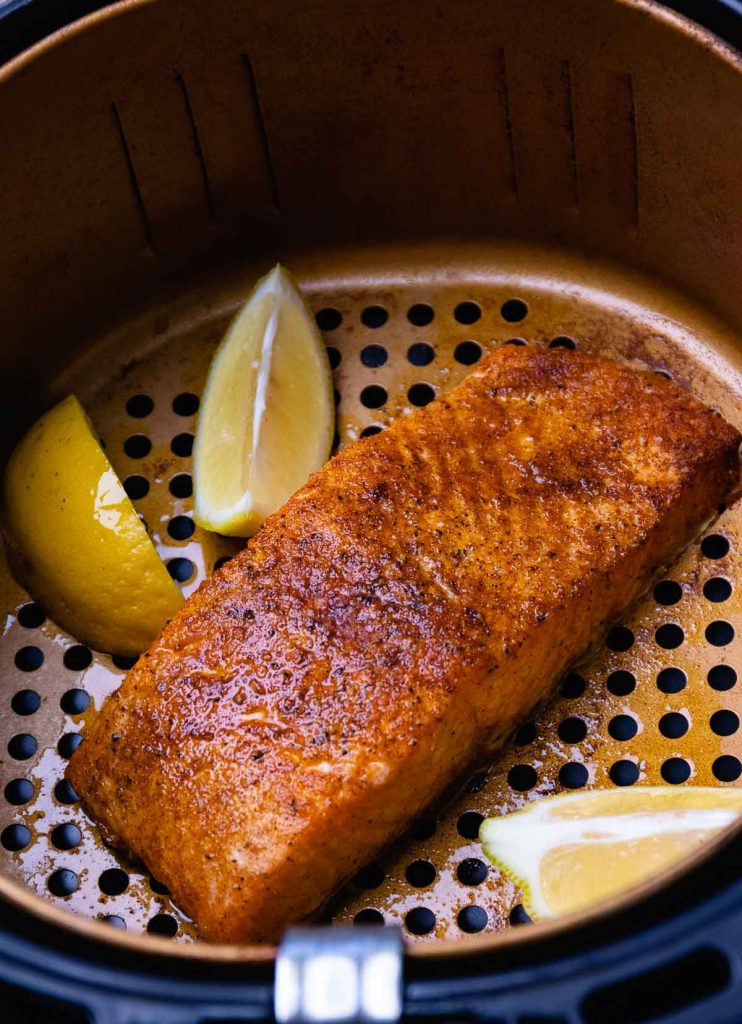


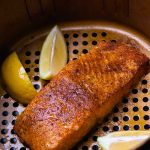
Air Fryer Salmon is tender, flaky, and full of flavour, with a beautifully seasoned outside and a juicy centre. Ready in around 10 minutes, this easy recipe is perfect for busy weeknights when you want a healthy, delicious dinner without spending hours in the kitchen. Serve it with roasted vegetables, rice, potatoes, or a fresh salad for a simple meal the whole family will enjoy!
Air Fryer Salmon Is a Weeknight Dinner Staple
If you’re looking for a quick and reliable way to cook salmon, the air fryer is an excellent choice. It circulates hot air around the fish, helping the outside cook beautifully while keeping the inside moist and tender.
Unlike cooking salmon in a pan, air frying requires very little hands-on attention. Simply season the fillets, place them in the basket, and let the air fryer do the work.
Here are a few reasons this recipe deserves a place in your weekly meal rotation:
- Quick cooking time: Most salmon fillets cook in approximately 7–10 minutes, depending on their thickness.
- Simple preparation: A few basic ingredients are all you need to create a flavourful meal.
- Tender and flaky texture: When cooked correctly, salmon stays moist and separates easily with a fork.
- Less mess: There’s no need for a frying pan full of oil, and cleanup is usually straightforward.
- Easy to customise: Change the seasonings to create lemon-garlic, Cajun, honey-mustard, or herb salmon.
- Nutritious meal option: Salmon provides protein and beneficial omega-3 fatty acids.
- Perfect for meal planning: Pair it with different vegetables, grains, and salads throughout the week.
Whether you’re cooking dinner for one or preparing a meal for the family, air fryer salmon makes eating well feel simple.
Key Ingredients
You only need a few everyday ingredients to make delicious air fryer salmon.
Salmon Fillets
Use 2 salmon fillets, approximately 5–6 ounces (140–170 g) each. Fresh or thawed frozen salmon works well.
You can choose skin-on or skinless fillets. Skin-on salmon may help protect the flesh during cooking, while skinless fillets are convenient for serving.
Try to select fillets of similar thickness so they finish cooking at roughly the same time.
Olive Oil
Use about 1 tablespoon of olive oil to help the seasonings stick and encourage light browning. You can substitute avocado oil or another suitable cooking oil.
Garlic Powder
Garlic powder adds savoury flavour without the risk of fresh garlic burning as quickly in the hot air.
Paprika
Paprika gives the salmon a lovely colour and mild warmth. Smoked paprika is a great option if you prefer a deeper, smoky flavour.
Salt and Black Pepper
Salt enhances the natural flavour of the salmon, while black pepper adds a gentle kick. Adjust the amounts according to your taste.
Lemon
Fresh lemon juice brightens the flavour and complements the richness of the salmon. Serve lemon wedges alongside the cooked fillets or squeeze a little juice over them just before serving.
Optional Seasonings
You can also add dried parsley, dill, onion powder, Italian seasoning, or a pinch of chilli flakes. These ingredients let you adapt the recipe to your favourite flavours.
How to Make Air Fryer Salmon
This easy method produces flavourful salmon with a tender centre and a lightly browned exterior.
Ingredients
- 2 salmon fillets, approximately 5–6 ounces (140–170 g) each
- 1 tablespoon olive oil
- ½ teaspoon garlic powder
- ½ teaspoon paprika
- ¼ teaspoon salt, or to taste
- ¼ teaspoon black pepper
- ½ lemon, cut into wedges
- Fresh parsley or dill, optional
Step 1: Prepare the Salmon
If you’re using frozen salmon, thaw it completely in the refrigerator before cooking. Remove the fillets from their packaging and pat them dry with paper towels.
Drying the surface helps the seasoning adhere and encourages better browning. Check for any remaining pin bones and remove them carefully with clean tweezers if necessary.
Step 2: Preheat the Air Fryer
Preheat your air fryer to 400°F (200°C) for approximately 3 minutes, if recommended by your appliance manufacturer.
A preheated air fryer helps the salmon begin cooking evenly as soon as it enters the basket.
Step 3: Season the Salmon
In a small bowl, combine the garlic powder, paprika, salt, and black pepper.
Brush or rub the salmon fillets lightly with olive oil, then sprinkle the seasoning mixture over the top and sides.
For extra flavour, add a little lemon zest before cooking. Save most of the lemon juice for serving to keep the seasoning from becoming too wet.
Step 4: Arrange the Fillets in the Basket
Place the salmon fillets in the air fryer basket in a single layer, leaving space between them.
If you’re cooking skin-on salmon, you can generally place it skin-side down. Avoid overcrowding the basket, as good air circulation helps the fish cook evenly.
Use a perforated air fryer liner only if it is approved for your appliance and is secured beneath the food. Never use a loose liner during preheating.
Step 5: Air Fry the Salmon
Cook at 400°F (200°C) for approximately 7–10 minutes for fillets around 1 inch (2.5 cm) thick.
Thinner fillets may cook faster, while thicker pieces may need additional time. Begin checking early and avoid repeatedly opening the basket, which can slow the cooking process.
Salmon is ready when the flesh is opaque, separates easily with a fork, and reaches an internal temperature of 145°F (63°C) at the thickest part, measured with a food thermometer.
If the salmon needs more time, continue cooking in 1-minute increments until it reaches the recommended temperature.
Step 6: Rest and Serve
Carefully remove the salmon from the air fryer and let it rest for about 2 minutes.
Finish with a squeeze of fresh lemon juice and a sprinkle of chopped parsley or dill, if desired.
Serve immediately with your favourite side dishes for a quick, satisfying dinner.
Recipe Tips
A few simple techniques can make a big difference to the texture and flavour of your air fryer salmon.
1. Choose Fillets of Similar Thickness
Salmon cooks relatively quickly, so differences in thickness can affect the final result. Choose fillets that are similar in size whenever possible.
If one fillet is thinner, check it earlier and remove it once it has finished cooking.
2. Pat the Salmon Dry
Excess moisture on the surface can prevent the seasoning from sticking properly. Pat the fillets dry with paper towels before adding oil and spices.
3. Don’t Overcook the Fish
Overcooked salmon can become dry and firm. Start checking the fillets after about 6–7 minutes, especially if they are thin.
Use a food thermometer to check the thickest part. The recommended safe internal temperature for fish is 145°F (63°C).
4. Avoid Overcrowding the Basket
Leave space between the fillets so hot air can circulate around them. Cook in batches if necessary.
5. Use a Light Coating of Oil
A little oil helps the seasoning stick and supports browning. You don’t need to coat the salmon heavily.
6. Adjust the Seasonings
This recipe is easy to customise. Try lemon pepper seasoning, Cajun spices, dried herbs, or a little chilli powder.
For a honey-garlic variation, brush a small amount of honey mixed with garlic onto the salmon during the final few minutes. Sugary glazes can burn, so check the fish frequently.
7. Cook Skin-On Salmon Skin-Side Down
If your fillets have skin, placing them skin-side down is a convenient way to cook them without having to flip them. The skin can help protect the flesh from direct heat.
8. Check the Temperature Instead of Relying Only on Time
Air fryer models differ, and fillet thickness has a major effect on cooking time. A food thermometer is the most reliable way to check whether the salmon has reached a safe temperature.
Frequently Asked Questions
How long does salmon take in the air fryer?
Salmon fillets around 1 inch thick generally take 7–10 minutes at 400°F (200°C). Thinner pieces may cook faster, while thicker fillets may need additional time. Always check the internal temperature before serving.
What temperature should I use for air fryer salmon?
A temperature of 400°F (200°C) is a good starting point for salmon fillets. It cooks the fish quickly while helping the surface develop colour.
Do I need to flip salmon in the air fryer?
No. Most salmon fillets cook well without flipping, especially when placed skin-side down. Leaving them in place also helps prevent delicate flesh from breaking apart.
Should I remove the skin before air frying salmon?
No. You can cook salmon with the skin on or off. Skin-on fillets are easy to handle and the skin can help protect the flesh during cooking. If you prefer skinless salmon, it works just as well.
Can I cook frozen salmon in the air fryer?
Yes, but thawing the salmon first is recommended for more even seasoning and predictable cooking. If cooking from frozen, follow a method specifically designed for frozen salmon, allow extra time, and verify that the thickest part reaches 145°F (63°C).
How do I know when air fryer salmon is done?
The flesh should look opaque and separate easily with a fork. For a reliable food-safety check, use a food thermometer and confirm that the thickest part reaches 145°F (63°C).
Why is my air fryer salmon dry?
Salmon usually becomes dry when it is overcooked. Fillets that are thin or small can finish cooking quickly, so check them early and remove them as soon as they reach the recommended internal temperature.
Can I use frozen salmon fillets after thawing?
Absolutely. Thaw frozen salmon in the refrigerator, then pat it dry and season it as you would fresh salmon. Cook according to the thickness of the fillets rather than relying only on the package weight.
What seasonings work best with air fryer salmon?
Garlic powder, paprika, salt, black pepper, lemon, dill, and parsley are all excellent choices. You can also use Cajun seasoning, Italian herbs, lemon pepper, or a light honey-mustard glaze.
What should I serve with air fryer salmon?
Air fryer salmon pairs well with roasted vegetables, asparagus, broccoli, green beans, rice, couscous, mashed potatoes, or a fresh salad. For a quick weeknight meal, serve it with air-fried potatoes and steamed vegetables.
Can I make air fryer salmon ahead of time?
You can cook salmon ahead of time and refrigerate it for later meals. However, it is generally juicier when freshly cooked. If preparing in advance, cool it promptly and store it in an airtight container in the refrigerator.
How do I store leftover air fryer salmon?
Allow leftovers to cool and refrigerate them in an airtight container within 2 hours of cooking. Use within 3–4 days. Reheat gently until thoroughly hot, or enjoy the cooked salmon cold in salads and sandwiches.
Air Fryer Salmon is a quick, versatile dinner that delivers plenty of flavour with minimal preparation. Once you know the right temperature and how to check for doneness, it’s easy to make tender, flaky salmon for busy weeknights, healthy lunches, and family meals.
PrintBest Air Fryer Salmon Recipe
- Prep Time: 5 minutes
- Cook Time: 9 minutes
- Total Time: 14 minutes
- Yield: 2 1x
- Category: Main Course
- Cuisine: American
Ingredients
- 2 Salmon Fillets (about ½ pound total)
- ½ tablespoon olive oil
- ⅛ teaspoon garlic powder
- ⅛ teaspoon paprika
- ¼ teaspoon Kosher salt
- ¼ teaspoon fresh cracked pepper
- ½ lemon sliced
Instructions
- Drizzle olive oil over salmon fillets.
- In a small bowl, mix together garlic powder, paprika, Kosher salt, and pepper. Sprinkle the seasoning mix over the salmon.
- Lightly spray the air fryer with cooking spray and place the salmon in the basket. Set the temperature for 400 degrees and the timer to 8 minutes.
- When the timer goes off, check the salmon for doneness. Add another 1-minute if desired.
- Remove the salmon from the air fryer and squeeze on fresh lemon juice and serve.
Notes
Make sure to use kosher salt for the best flavor without the overly salty taste that table salt gives.