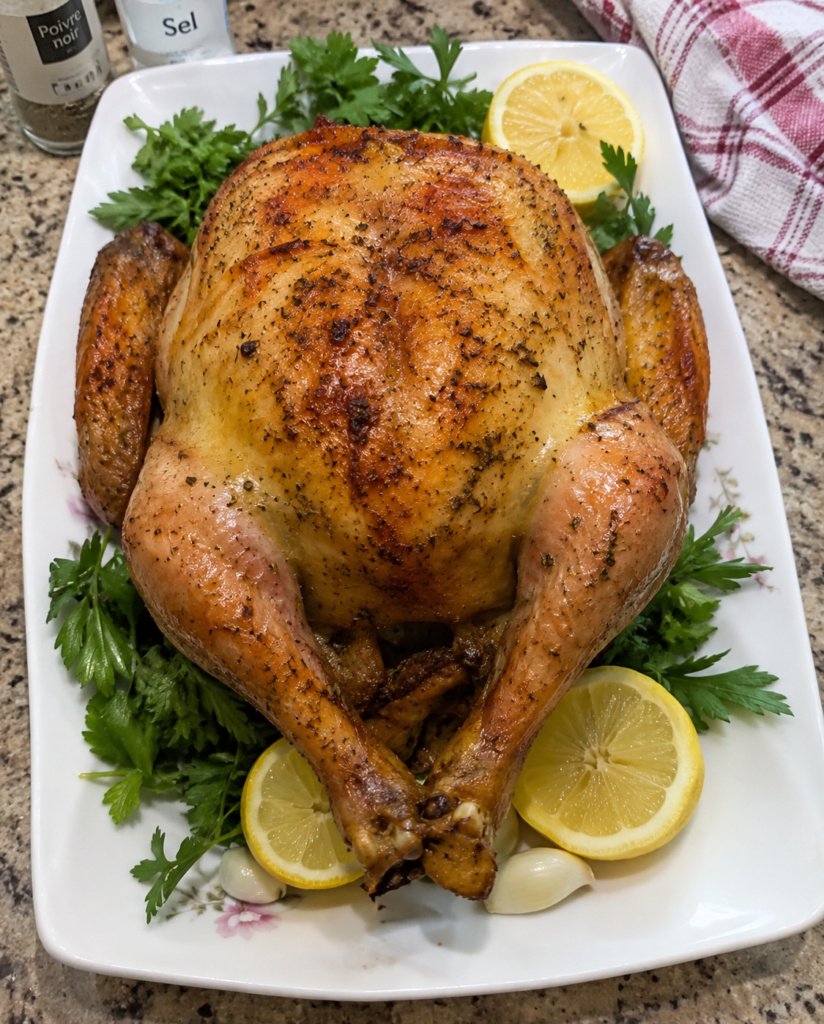

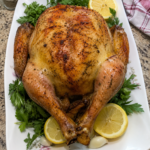
Nothing says a special family gathering quite like a beautifully cooked Classic Roast Turkey. With golden, crispy skin, juicy and tender meat, and a delicious blend of butter, garlic, and fresh herbs, this traditional recipe is perfect for Thanksgiving, Christmas, or any festive occasion.
Roasting a whole turkey might seem intimidating, especially if you’re preparing one for the first time, but it’s easier than you think. With a little preparation, a simple homemade seasoning mixture, and the right cooking temperature, you can make a delicious roast turkey that everyone will love.
The secret to a flavourful turkey is to season it generously, prepare the skin properly, and avoid overcooking the meat. Rubbing herb butter under and over the skin helps add flavour while encouraging the outside to become beautifully golden.
I love serving this Classic Roast Turkey with creamy mashed potatoes, homemade stuffing, roasted vegetables, cranberry sauce, and rich turkey gravy. It’s the perfect centrepiece for a holiday dinner and provides plenty of leftovers for sandwiches, soups, and other delicious meals.
Whether you’re hosting a large Thanksgiving gathering or preparing a traditional Christmas dinner, this easy roast turkey recipe is one you’ll want to make year after year!
Classic Roast Turkey Ingredients
You only need a few simple ingredients to prepare a delicious homemade roast turkey. The combination of butter, garlic, herbs, and seasoning creates a wonderful flavour while helping the skin become golden and crispy.
- Whole turkey: Use a fully thawed turkey weighing approximately 10–12 pounds (4.5–5.5 kg). Remove the neck and giblets from the cavity before preparing it. Choose a turkey that fits comfortably inside your roasting pan.
- Unsalted butter: Softened butter helps the skin brown beautifully and adds richness to the meat. It also provides a base for the garlic and herb seasoning.
- Olive oil: A little olive oil mixed with the butter helps coat the turkey evenly.
- Garlic: Fresh minced garlic adds a delicious savoury flavour that works perfectly with the herbs.
- Fresh rosemary: Adds a wonderful earthy, aromatic flavour to the turkey.
- Fresh thyme: Complements the rosemary and gives the butter mixture a classic roasted herb flavour.
- Fresh parsley: Adds freshness and colour to the seasoning mixture.
- Paprika: Helps give the turkey skin a beautiful golden colour and a mild smoky flavour.
- Salt: Essential for seasoning the meat and enhancing its natural flavour.
- Black pepper: Adds a little warmth and balances the richness of the butter.
- Onion: Cut an onion into quarters and place it inside the turkey cavity for extra aroma.
- Lemon: Cut a lemon into halves or quarters to add a fresh citrus aroma.
- Celery: A few celery stalks inside the cavity add a subtle savoury flavour.
- Chicken or turkey broth: A little broth in the roasting pan helps keep the drippings from drying out and provides a flavourful base for homemade gravy.
Classic Roast Turkey Instructions
Preparing a classic roast turkey takes a little time, but the steps are straightforward. Follow these instructions to achieve golden skin and juicy, tender meat.
Step 1: Thaw and prepare the turkey
If your turkey is frozen, thaw it completely in the refrigerator before cooking. A large turkey can take several days to thaw, so plan ahead.
Remove the packaging and take out the neck and giblets from the cavity. Check both ends of the turkey because some birds have giblets stored in a separate cavity.
Pat the turkey dry thoroughly with paper towels, including the inside of the cavity.
Removing excess moisture helps the skin brown more effectively during roasting.
Do not wash raw turkey under running water, as this can spread bacteria around your kitchen.
Step 2: Prepare the herb butter
In a small bowl, combine the softened butter, olive oil, minced garlic, chopped rosemary, thyme, parsley, paprika, salt, and black pepper.
Mix everything together until you have a smooth, fragrant herb butter.
Taste a tiny amount of the mixture and adjust the seasoning if necessary.
Step 3: Season the turkey
Place the turkey breast-side up in a large roasting pan fitted with a rack.
Gently loosen the skin over the breast using your fingers, being careful not to tear it.
Spread some of the herb butter underneath the skin, directly over the breast meat. This helps flavour the meat and keeps the surface moist during cooking.
Rub the remaining herb butter over the outside of the turkey, covering the breast, legs, wings, and sides.
Make sure the turkey is evenly coated.
Step 4: Prepare the turkey cavity
Place the quartered onion, lemon pieces, and celery stalks inside the turkey cavity.
These ingredients add aroma and flavour as the turkey roasts.
Avoid packing the cavity tightly. If you prefer to cook traditional bread stuffing, prepare it separately in a baking dish rather than stuffing the turkey for more predictable cooking.
If desired, tuck the wing tips underneath the body to help prevent them from browning too quickly.
Step 5: Preheat the oven
Preheat your oven to 325°F (163°C).
Make sure the oven rack is positioned low enough to allow the turkey to fit comfortably.
Add approximately 1–2 cups of chicken or turkey broth to the bottom of the roasting pan.
Step 6: Roast the turkey
Place the turkey in the preheated oven, breast-side up.
For an unstuffed turkey weighing approximately 10–12 pounds (4.5–5.5 kg), allow around 2¾–3 hours as an initial estimate.
Cooking times vary depending on the turkey’s size, shape, starting temperature, and oven. A larger bird will need more time.
Baste the turkey occasionally with the pan juices if desired. However, frequent opening of the oven door can lower the temperature and extend the cooking time.
If the skin becomes too dark before the turkey is cooked, loosely cover the breast with aluminium foil.
Step 7: Check the internal temperature
The most important part of roasting turkey is making sure it reaches a safe internal temperature.
Use a reliable food thermometer to check:
- The thickest part of the breast.
- The innermost part of the thigh.
- The innermost part of the wing.
Avoid touching the bone when taking the temperature.
The turkey is safe to serve when all these areas reach 165°F (74°C). If any area has not reached the required temperature, return the turkey to the oven and continue cooking.
Never rely only on the colour of the skin or the estimated cooking time.
Step 8: Rest the turkey
Once the turkey reaches 165°F (74°C), carefully remove it from the oven.
Transfer it to a cutting board or serving platter and loosely cover it with aluminium foil.
Allow the turkey to rest for approximately 20–30 minutes before carving. This gives the juices time to redistribute and makes the meat easier to slice.
Step 9: Carve and serve
Remove the legs and wings first, then slice the breast meat against the grain.
Arrange the turkey slices on a large serving platter and garnish with fresh rosemary, thyme, or parsley.
Serve warm with homemade gravy, mashed potatoes, roasted vegetables, stuffing, and cranberry sauce.
Enjoy your beautiful Classic Roast Turkey!
Substitutions
One of the best things about this recipe is that you can easily adjust the ingredients depending on what you have available.
Here are some simple substitutions and additions:
1. Butter Instead of Olive Oil
If you prefer a richer flavour, use additional softened butter instead of olive oil. Butter helps create a delicious golden exterior and gives the turkey a classic roasted flavour.
2. Use Different Herbs
Rosemary, thyme, and parsley work beautifully together, but you can experiment with other herbs.
Try sage, oregano, marjoram, or poultry seasoning. Fresh or dried herbs can both be used, although dried herbs are more concentrated, so use smaller quantities.
3. Garlic Powder Instead of Fresh Garlic
If you don’t have fresh garlic, use garlic powder instead. It blends easily into the butter mixture and adds a similar savoury flavour.
4. Use Lemon Zest Instead of a Whole Lemon
If you prefer a stronger citrus flavour, add lemon zest to the herb butter. You can also use orange zest for a slightly sweeter, festive flavour.
5. Replace Chicken Broth with Vegetable Broth
Vegetable broth works well if you don’t have chicken or turkey broth. It still adds moisture and flavour to the roasting pan.
6. Add Smoked Paprika
For a deeper, slightly smoky flavour, replace regular paprika with smoked paprika. It also gives the turkey skin a lovely colour.
7. Use Dried Herbs
Fresh herbs are wonderful, but dried herbs are a convenient alternative. Use approximately one-third of the amount of dried herbs compared with fresh herbs.
8. Add More Vegetables
You can place carrots, celery, onions, and garlic cloves around the turkey in the roasting pan. They absorb the delicious drippings and can be used to flavour homemade gravy.
Frequently Asked Questions
1. How long does it take to roast a whole turkey?
A 10–12-pound unstuffed turkey generally takes around 2¾–3 hours at 325°F (163°C). Larger turkeys take longer, and cooking times can vary depending on the oven and the shape of the bird. Always use a food thermometer to check that the breast, thigh, and wing areas reach 165°F (74°C).
2. What temperature should I roast a turkey at?
I recommend roasting turkey at 325°F (163°C). This temperature allows the meat to cook evenly while helping the skin develop a beautiful golden colour.
3. Should I cover the turkey while roasting?
You don’t need to cover the turkey for the entire cooking time. Roast it uncovered to help the skin brown. If the breast becomes too dark before the meat is fully cooked, loosely cover that area with aluminium foil.
4. Should I put butter under the turkey skin?
Yes! Spreading herb butter underneath the skin is a great way to add flavour directly to the breast meat. It also helps the surface stay moist while roasting.
5. Do I need to baste the turkey?
Basting is optional. It can add flavour to the skin, but repeatedly opening the oven door releases heat and may increase the cooking time. The herb butter already provides plenty of flavour.
6. How do I know when my turkey is fully cooked?
Use a food thermometer to check the thickest part of the breast, the innermost thigh, and the innermost wing. All three areas must reach 165°F (74°C). Do not rely on the colour of the juices or the appearance of the skin alone.
7. Should I wash my turkey before roasting?
No. Washing raw turkey can spread harmful bacteria around your sink and kitchen. Simply remove the packaging and giblets, then pat the turkey dry with paper towels.
8. Can I prepare the turkey the day before?
Absolutely! You can prepare the herb butter and season the turkey a day ahead. Keep the seasoned turkey covered in the refrigerator at 40°F (4°C) or below until you are ready to roast it. This also gives the seasoning time to flavour the meat.
9. Do I need to stuff the turkey?
No. This recipe uses onion, lemon, and celery in the cavity for aroma, but you don’t need to add bread stuffing. Cooking stuffing separately is often easier and allows it to reach a safe temperature without affecting the turkey’s cooking time.
10. How long should I let the turkey rest before carving?
Allow the cooked turkey to rest for approximately 20–30 minutes before carving. This helps the juices settle and makes it easier to cut neat slices.
Storage
If you have leftover Classic Roast Turkey, you can store it for several days or freeze it for future meals.
Refrigerating leftover turkey:
Remove the remaining meat from the bones and divide it into smaller portions. Place the turkey in shallow airtight containers and refrigerate within 2 hours of cooking.
Keep refrigerated turkey at 40°F (4°C) or below and enjoy it within 3–4 days.
It’s best to store the meat separately from gravy and other side dishes.
Freezing leftover turkey:
Roast turkey freezes well, making it perfect for preparing future meals.
- Allow the turkey to cool slightly.
- Remove the meat from the bones.
- Divide it into individual portions.
- Place the portions in freezer-safe bags or airtight containers.
- Remove excess air and label with the date.
- Freeze for up to 2–3 months for the best quality.
You can freeze sliced turkey or shredded turkey, depending on how you plan to use it later.
How to thaw frozen turkey:
The safest way to thaw cooked turkey is in the refrigerator overnight.
Avoid leaving turkey on the kitchen counter to thaw. If you need to use it directly from frozen, you can add it to a suitable hot dish and heat it thoroughly.
How to reheat leftover turkey:
Place the turkey slices in an oven-safe dish with a little chicken broth or gravy. Cover with foil and heat at 325°F (163°C) until warmed through.
You can also reheat smaller portions in the microwave, covering them loosely and heating in short intervals.
Always reheat leftovers to an internal temperature of 165°F (74°C).
Top Tip
The secret to a juicy Classic Roast Turkey is not to overcook it! Use a reliable food thermometer instead of relying only on cooking times. Remove the turkey from the oven once the breast, thigh, and wing areas have all reached 165°F (74°C), then allow it to rest for 20–30 minutes before carving.
For extra flavour, prepare the herb butter a day ahead and spread some underneath the turkey skin. This simple step makes a big difference, giving you beautifully seasoned meat and delicious golden skin!
PrintEasy Thanksgiving Turkey
- Prep Time: 10 minutes
- Cook Time: 3 hours - 5.5 hours
- Total Time: 59 minute
- Yield: 16 1x
- Category: Dinner
- Method: Oven Roasted
- Cuisine: American
Ingredients
- 1 (12-22 pound) turkey
- 2 tablespoons olive oil (or melted butter)
- 1 yellow onion, quartered
- 1 lemon, halved
Seasonings:
- 2 tablespoons salt
- 2 tablespoons brown sugar
- 1 tablespoon garlic powder
- 1 tablespoon onion powder
- 2 teaspoons ground sage
- 2 teaspoons paprika
- 1 teaspoons dried thyme
- 1 teaspoons dried rosemary
- 1 teaspoon black pepper
Instructions
- Prepare the oven: move an oven rack to the lowest position possible. Preheat the oven to 350°F degrees.
- Prepare the turkey: take the turkey out of the packaging. Remove the neck & giblets from the inside cavity. Pat dry with paper towels. Stuff with onion and lemon. Tuck the wings under the body and tie the legs with twine (optional).
- Add seasoning: Rub turkey with 2 tablespoons of olive oil (or butter). mix the seasonings and rub it all over the turkey, adding some under the skin and in the inner cavity if desired.
- Roast: cook your turkey in a roasting pan in the preheated oven for 13-15 minutes per pound. Tent loosely with foil if it becomes too brown. The turkey is done when the temperature reaches 165°F in the thickest part of the breast and the thigh.
- Rest & serve: remove the turkey from the oven and let it rest for 20-30 minutes before slicing and serving.