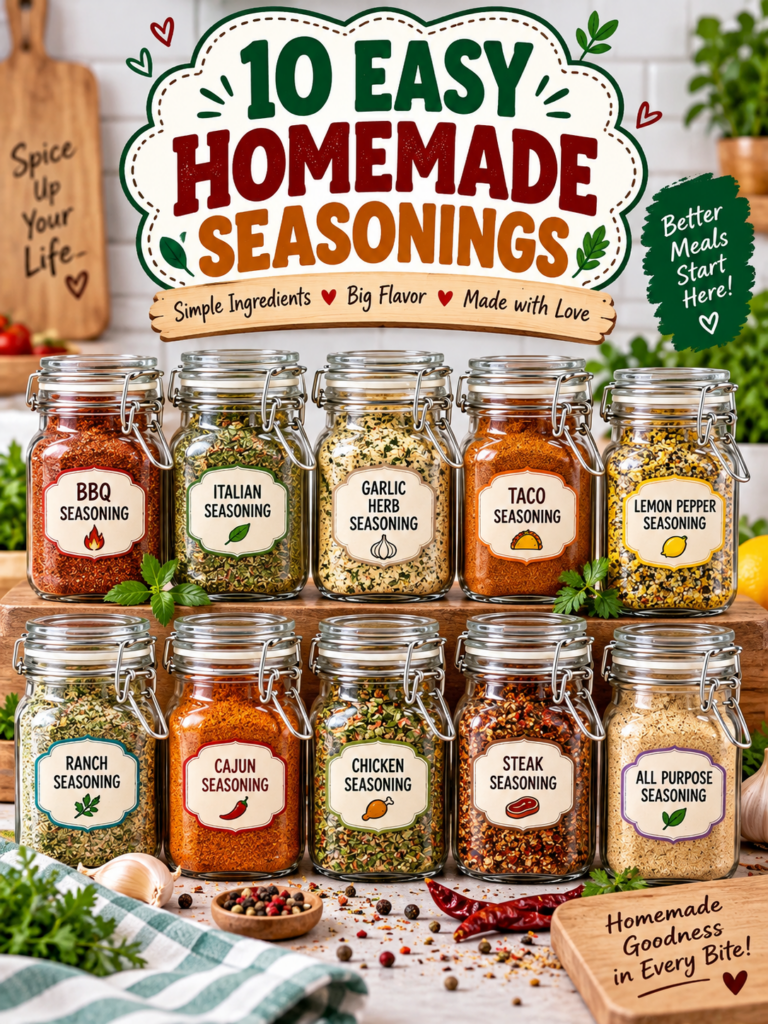


Making your own Homemade Spice Blends is one of the easiest ways to add big flavour to everyday meals. Instead of reaching for a different seasoning packet every time you cook, you can keep a few versatile homemade blends in your pantry and use them whenever you need a quick flavour boost.
Homemade spice mixes are also incredibly convenient because most of the ingredients are common pantry staples. With a few measuring spoons, small airtight jars, and your favourite dried herbs and spices, you can create blends for tacos, fajitas, Cajun dishes, chili, seafood, Italian recipes, and even desserts. The original source features seven versatile blends covering these categories.
One of the biggest advantages is control. You can make your blends saltier, milder, smokier, spicier, or more aromatic depending on how you cook. You also know exactly what went into each jar, which makes homemade seasoning particularly useful when you want to control ingredients or adjust recipes to suit your family.
Why Make Homemade Spice Blends?
There is something satisfying about opening your spice cabinet and having a homemade seasoning ready to go. Instead of measuring several individual spices every time you cook, you can simply grab one jar and season your food in seconds.
Homemade blends are especially useful for busy weeknights. A taco seasoning can turn plain ground beef into a flavorful taco filling, while a Cajun blend can instantly add personality to chicken, shrimp, vegetables, rice, or pasta.
Another advantage is customization. Store-bought seasoning mixes can sometimes be too salty or too spicy for your taste. When you make your own, you can change the proportions to create a blend that works for you.
You can also make small or large batches. If you use a particular seasoning frequently, prepare a larger jar. If you are trying a blend for the first time, make a small amount and adjust it the next time.
The original recipe collection notes that making spice blends mainly involves measuring the spices, mixing them together, and storing the finished mixture.
What You Need to Make Homemade Spice Blends
You do not need special equipment to make homemade seasoning mixes.
A few measuring spoons, a small bowl, a spoon or whisk, and airtight spice jars are enough.
Small glass jars are particularly convenient because they are reusable and easy to label. You can also use clean recycled spice containers as long as they are completely dry and have secure lids.
Labels are worth adding, especially if you plan to make several blends. Write the name of the seasoning and the date you made it on each jar.
This prevents confusion when you have several similar-looking spice mixtures in the pantry.
Keep your jars in a cool, dry, dark place away from heat and moisture. The goal is to protect the aromatic oils and keep the spices tasting fresh.
Taco Seasoning
Taco seasoning is one of the most useful homemade spice blends to keep on hand. A basic version combines chili powder, paprika, cumin, onion powder, garlic powder, oregano, cayenne pepper, salt, and black pepper. Crushed red pepper can also be added when you want additional heat.
The combination creates a warm, savoury, slightly smoky flavour that works beautifully with ground beef, chicken, turkey, beans, vegetables, and even roasted potatoes.
To make the blend, combine your dried spices in a bowl and whisk until evenly distributed. Transfer the mixture to an airtight jar and label it.
For ground beef tacos, start with roughly 2 tablespoons of homemade taco seasoning per pound of meat and adjust according to taste. The source specifically notes that 2 tablespoons is equivalent to a packet of store-bought taco seasoning.
You can also use taco seasoning to flavour homemade quesadillas, taco bowls, nachos, burritos, Mexican rice, roasted vegetables, and grilled chicken.
For a mild blend, reduce or eliminate cayenne pepper. For extra heat, increase cayenne or add crushed red pepper flakes.
Fajita Seasoning
Fajita seasoning brings a smoky, savoury flavour to meat and vegetables. The referenced recipe uses chili powder, cumin, smoked paprika, garlic powder, onion powder, granulated sugar, black pepper, kosher salt, and cayenne pepper.
Smoked paprika is particularly useful because it gives the blend a deeper flavour that works well with grilled or skillet-cooked foods.
Use this seasoning on chicken, steak, shrimp, peppers, onions, mushrooms, and other vegetables.
For an easy dinner, toss sliced chicken, bell peppers, and onions with a little oil and fajita seasoning before cooking them in a hot skillet.
You can then serve everything inside warm tortillas with sour cream, salsa, guacamole, shredded cheese, and fresh lime.
The small amount of sugar in the blend can help encourage browning when the seasoned ingredients are cooked at a high temperature.
Cajun Seasoning
Cajun seasoning is a fantastic all-purpose blend for anyone who enjoys bold, savoury flavours.
The source’s Cajun combination includes paprika, salt, garlic powder, black pepper, onion powder, cayenne pepper, dried oregano, and dried thyme.
The blend can be used on seafood, chicken, vegetables, soups, rice dishes, and pasta.
Try sprinkling Cajun seasoning over shrimp before sautéing them in butter. You can also use it to season chicken thighs before grilling or air frying.
For vegetables, toss potatoes, corn, cauliflower, zucchini, or bell peppers with olive oil and Cajun seasoning before roasting.
Because Cajun seasoning can contain a significant amount of salt, taste your finished dish before adding additional salt.
If you prefer a milder blend, reduce the cayenne pepper. If you love heat, increase the cayenne gradually.
Chili Seasoning
Homemade chili seasoning is another pantry staple that can be used for much more than chili.
A basic blend includes ground cumin, cayenne pepper, mild red chile powder or sweet paprika, garlic powder, black pepper, salt, and dried oregano.
Cumin gives the mixture its characteristic earthy warmth, while oregano contributes an herbal note and chile powder provides colour and flavour.
Use the blend to season beef, turkey, chicken, beans, rice, pasta, tacos, or roasted vegetables.
You can also sprinkle a little over baked potatoes before adding cheese and sour cream.
One advantage of making chili seasoning yourself is that you can control the heat. The referenced recipe notes that cayenne and red chile powder contribute heat, making them easy to adjust according to personal preference.
For a family-friendly version, keep the cayenne low and let everyone add hot sauce individually.
Old Bay Style Seasoning
Old Bay-style seasoning is particularly useful for seafood and summer cooking, but its uses go far beyond shrimp and crab.
The referenced homemade blend combines celery salt, paprika, cayenne, black pepper, garlic powder, onion powder, mustard seed, ginger, allspice, nutmeg, and bay leaves.
The result is a complex blend with savoury, spicy, aromatic, and slightly sweet notes.
Use it on shrimp, crab, fish, lobster, potatoes, corn, fries, roasted vegetables, popcorn, or seafood boils.
You can also add a small amount to creamy dips, potato salad, egg salad, or homemade seafood cakes.
If using whole bay leaves in a homemade blend, they should not simply be left whole in the finished seasoning if you want the blend to behave like a powdered spice. The source notes that the bay leaves should be ground or replaced with powdered bay leaf.
Italian Seasoning
Italian seasoning is one of the easiest blends to use throughout the week.
The referenced recipe combines marjoram, basil, oregano, thyme, rosemary, garlic powder, onion powder, and sage.
This blend is ideal for pasta sauces, pizza, chicken, beef, roasted vegetables, soups, garlic bread, and marinades.
Sprinkle it over chicken breasts before roasting or mix it into olive oil to create a quick herb marinade.
You can also stir Italian seasoning into tomato sauce for pasta or sprinkle it over mozzarella and tomatoes for an easy appetizer.
For roasted vegetables, combine olive oil, Italian seasoning, salt, and black pepper before roasting potatoes, zucchini, mushrooms, peppers, or broccoli.
Because dried herbs can vary in intensity, taste your blend and adjust the proportions the next time you make it.
Pumpkin Pie Spice
Pumpkin Pie Spice is the sweet option in this collection and is especially useful during autumn.
The blend featured in the source combines cinnamon, ginger, nutmeg, allspice, and cloves.
The warm combination works beautifully in pumpkin pie, cakes, muffins, cookies, pancakes, French toast, oatmeal, coffee, hot chocolate, and whipped cream.
You can also sprinkle it over roasted sweet potatoes or mix a small amount into homemade granola.
Cinnamon provides the dominant warm sweetness, while ginger adds gentle spice. Nutmeg, allspice, and cloves create the deeper autumn aroma.
If you prefer a gentler blend, reduce the cloves because they can become strong quickly.
How To Make Homemade Spice Blends
Making these blends could not be simpler.
Start by measuring each spice carefully.
Add all the ingredients to a small bowl.
Use a whisk or spoon to combine everything thoroughly.
If you are making the blend directly in a jar, place the ingredients inside, secure the lid, and shake vigorously.
The most important part is making sure the ingredients are evenly distributed. You do not want all the cayenne or salt sitting at the bottom of the container.
Once mixed, transfer the seasoning to a clean, completely dry airtight container.
Label the jar with the name of the blend and the date it was prepared.
Store it in a cool, dry, dark cupboard.
The source’s basic preparation method is simply to stir the ingredients together and transfer them to an airtight container.
How To Store Homemade Spice Blends
Proper storage makes a significant difference in how long your blends maintain their flavour.
Keep the jars tightly sealed whenever they are not being used.
Store them away from direct sunlight and heat. A cupboard or pantry is generally better than a shelf directly above the stove.
Avoid storing spice jars next to steam-producing appliances because moisture can enter the container and cause the spices to clump.
Always use a dry measuring spoon when taking seasoning from the jar.
A wet spoon can introduce moisture and shorten the quality of the blend.
Although dried spices can remain usable beyond their peak freshness, their flavour and aroma gradually become less powerful. The source’s chili seasoning guidance notes that a homemade blend is strongest for around a month, after which it may still be usable but gradually loses potency.
How To Customize Homemade Spice Blends
One of the best reasons to make your own seasoning is the ability to customize it.
If you prefer spicy food, increase cayenne pepper, chili powder, or crushed red pepper.
For a milder blend, reduce the hot spices.
If you are watching your sodium intake, reduce the salt and rely more on herbs, garlic, onion, pepper, citrus zest, or spices for flavour.
For a smoky flavour, use smoked paprika.
For a sweeter profile, a small amount of sugar can work well in blends intended for grilled foods.
Remember that changes to a blend can affect the final flavour, so make small adjustments rather than changing several ingredients dramatically at once.
Ways To Use Homemade Spice Blends
Homemade seasoning mixes are useful in almost every part of the kitchen.
Use taco seasoning for ground beef, chicken, beans, nachos, tacos, quesadillas, and rice.
Use fajita seasoning for grilled chicken, steak, shrimp, peppers, and onions.
Use Cajun seasoning for seafood, chicken, pasta, rice, potatoes, soups, and roasted vegetables.
Use chili seasoning for chili, beans, ground meat, tacos, and baked potatoes.
Use Old Bay-style seasoning for seafood boils, shrimp, crab, potatoes, corn, fries, and dips.
Use Italian seasoning for pasta, pizza, chicken, vegetables, soups, and sauces.
Use Pumpkin Pie Spice for pies, cakes, cookies, pancakes, oatmeal, coffee, and autumn desserts.
You can even experiment by combining blends. For example, a little Cajun seasoning mixed with Italian herbs can create an interesting seasoning for roasted chicken.
Homemade Spice Blend Tips
Measure Carefully
When making a blend for the first time, follow the measurements closely.
Once you understand the flavour profile, you can adjust the proportions.
Make Small Batches First
If you are testing a new combination, make a small batch.
This allows you to adjust the recipe before committing to a large jar.
Use Fresh Spices
Older spices lose their aroma over time.
If a spice smells weak when you open the container, the finished blend may also lack flavour.
Label Everything
It is easy to forget what is inside a jar.
Write the name and preparation date directly on the label.
Keep Salt Under Control
Salt can quickly dominate a spice blend.
If you plan to use the seasoning on foods that are already salty, consider making a lower-sodium version.
Shake Before Using
Some heavier ingredients can settle toward the bottom of the jar.
Give the container a quick shake before measuring the seasoning.
Don’t Shake Directly Over Steam
When seasoning food on the stove, avoid holding the open spice jar directly over a steaming pot or skillet.
Moisture can enter the container and cause the blend to clump.
Homemade Spice Blends FAQ
Are homemade spice blends worth making?
Yes. They are quick to prepare, customizable, convenient, and allow you to control the ingredients.
How long do homemade spice blends last?
They can remain usable for quite some time when stored properly, but ground spices and dried herbs gradually lose flavour and aroma. For the best taste, make manageable batches and replace them when their aroma becomes noticeably weak.
Do homemade spice blends need to be refrigerated?
Generally, no. Dry spice blends should be stored in airtight containers in a cool, dry, dark pantry or cupboard.
Can I double these recipes?
Yes. Most dry seasoning blends can easily be doubled or tripled. The source specifically notes that its chili seasoning can be doubled or tripled to make a larger batch.
Can I make homemade seasoning without salt?
Yes. Simply omit the salt and add it separately when cooking. This gives you greater control over the final sodium level.
Can I use fresh herbs?
For dry seasoning blends intended for pantry storage, dried herbs are generally the better choice. Fresh herbs contain moisture and can spoil, so they are not a direct substitute in a shelf-stable dry blend.
What is the best container for spice blends?
Small airtight glass jars are an excellent choice. They are easy to label, reusable, and protect the seasoning from moisture.
How do I know when a spice blend is no longer good?
If the blend has developed an unusual smell, visible moisture, mould, or other signs of spoilage, discard it. If it simply smells weak, the spices may have lost potency rather than spoiled.
Final Thoughts
Homemade Spice Blends are a simple way to make everyday cooking faster, easier, and more flavorful. With a handful of basic spices, you can create versatile blends for tacos, fajitas, Cajun dishes, chili, seafood, Italian meals, and autumn desserts.
The real advantage is flexibility. You can adjust the salt, heat, smokiness, sweetness, and herbs to match your preferences. Once you start making your own blends, you may find yourself reaching for the spice jar instead of buying pre-made packets.
The seven blends featured here give you an excellent starting point: Taco Seasoning, Fajita Seasoning, Cajun Seasoning, Chili Seasoning, Old Bay-style Seasoning, Italian Seasoning, and Pumpkin Pie Spice. These cover everything from weeknight dinners to holiday baking.
Keep each blend in a clean, airtight container and store it in a cool, dry, dark place. Make smaller batches if you do not use spices frequently, and larger batches for the seasonings you reach for most often.
Once you have these homemade blends ready in your pantry, a simple dinner can become much more exciting with just a spoonful of seasoning.
PrintHomemade Spice Blends
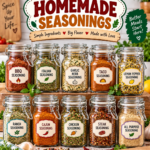
Learn how to easily make your own homemade seasoning blends right at home.
Ingredients
Fajita Seasoning
- 1 tablespoon chili powder
- 2 teaspoons ground cumin
- 2 teaspoons smoked paprika
- 2 teaspoons garlic powder
- 1 teaspoon onion powder
- 1 teaspoon granulated sugar
- ½ teaspoon black pepper
- ½ teaspoon kosher salt
- ¼ teaspoon cayenne pepper
Cajun Seasoning
- 2 ½ tablespoons paprika
- 2 tablespoons salt
- 2 tablespoons garlic powder
- 1 tablespoon black pepper
- 1 tablespoon onion powder
- 1 tablespoon cayenne pepper
- 1 tablespoon dried oregano
- 1 tablespoon dried thyme
Old Bay Seasoning
- 2 Tablespoons Celery Salt
- 1 tablespoon Paprika
- 1 teaspoon Cayenne
- 1 teaspoon Black Pepper
- 1 teaspoon Garlic Powder
- 1 teaspoon Onion Powder
- ¼ teaspoon Ground mustard seed
- ⅛ teaspoon Ginger
- ⅛ teaspoon Allspice
- ⅛ teaspoon Ground Nutmeg
- 3 Bay leaves
Pumpkin Pie Spice Seasoning
- 3 tablespoons ground cinnamon
- 2 teaspoons ground ginger
- 2 teaspoons ground nutmeg
- 1 teaspoon ground allspice
- 1 teaspoon ground cloves
Instructions
- Stir all the ingredients together and pour into an air-tight container.