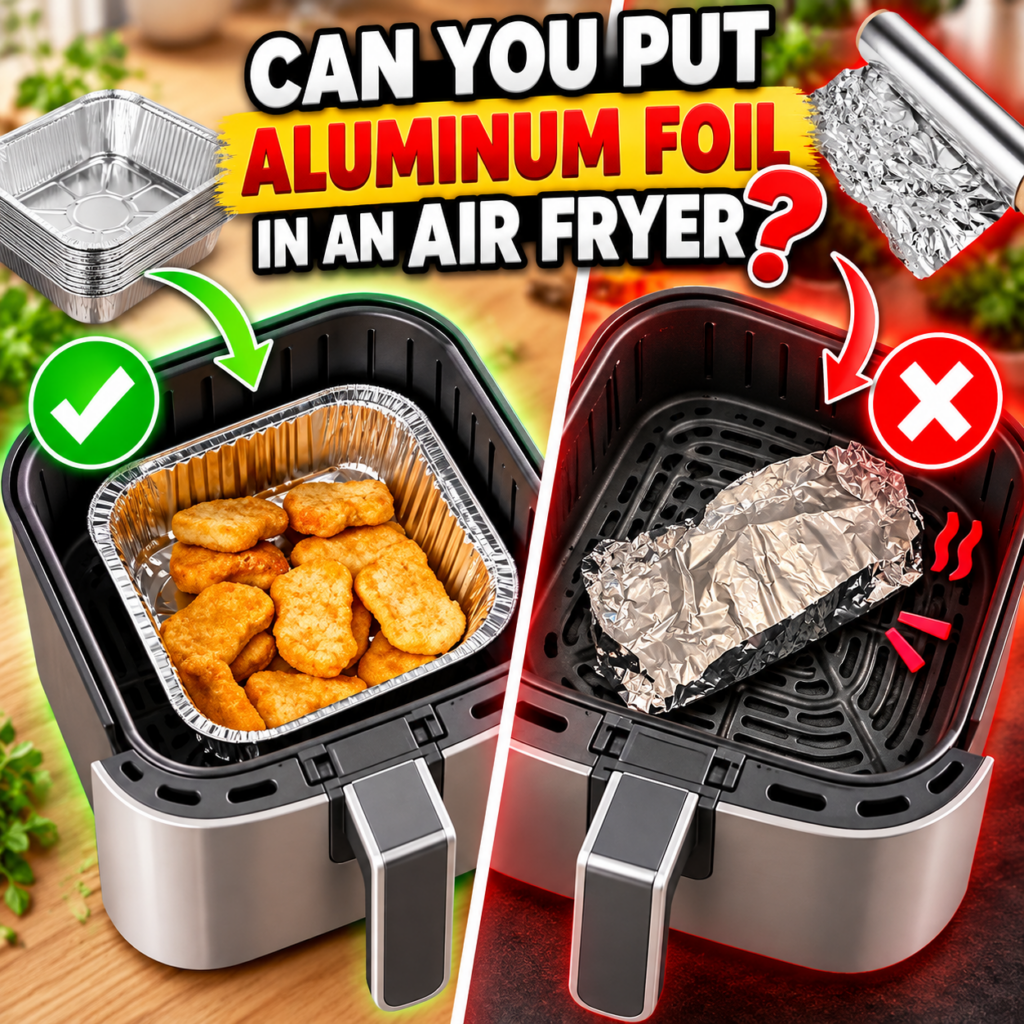


Yes, you can generally put aluminium foil in an air fryer, but there are a few important safety rules to follow. When used correctly, foil can make cleanup easier, help contain marinades, and prevent delicate foods from sticking to the basket. However, using it incorrectly can block airflow, affect cooking results, or create a fire hazard if it comes into contact with the heating element.
Before using foil, always check your air fryer’s instruction manual, as recommendations can vary between models. Here’s how to use aluminium foil safely and when it’s best to choose another option.
Understanding the Function of an Air Fryer
An air fryer is a compact countertop appliance that cooks food by circulating hot air around it at high speed. Although it’s called a fryer, it works more like a small convection oven than a traditional deep fryer.
A heating element warms the air, while a fan circulates it around the food. This helps the surface brown and crisp with much less oil than deep-frying typically requires.
Why Airflow Matters
Air circulation is essential to how an air fryer cooks food. Hot air needs to reach the food’s surface to help it cook evenly and develop a crisp texture.
If aluminium foil covers too much of the basket or blocks the air vents, it can interfere with this circulation. As a result, food may cook unevenly, take longer to prepare, or become less crispy.
For example, air fryer chips need good airflow to develop a crisp exterior. Covering the entire basket with foil may prevent the hot air from circulating around them properly.
What Does Aluminium Foil Do in an Air Fryer?
Aluminium foil can act as a barrier between food and the basket. Depending on how it’s used, it can:
- Catch drips from foods such as marinated chicken or fish.
- Help prevent delicate foods from sticking.
- Make cleanup easier after cooking greasy or sticky dishes.
- Keep certain ingredients together when cooking small portions.
However, foil doesn’t automatically improve cooking results. It can reduce browning on surfaces covered by the foil, and it must be secured properly to avoid being lifted by the fan.
How to Safely Use Aluminum Foil in Your Air Fryer
If your air fryer manufacturer permits aluminium foil, follow these precautions to reduce the risk of problems.
1. Check Your Air Fryer Manual First
This is the most important step. Some manufacturers allow aluminium foil in certain areas of the basket, while others advise against it.
Check whether your model has specific instructions about foil, liners, or accessories. If the manual says not to use foil, follow that advice.
2. Never Block the Airflow
Avoid covering the entire basket or tray with foil. Leave sufficient space for hot air to circulate around the food and through the appliance’s designed air passages.
If you’re cooking chips, vegetables, or breaded foods that need a crisp surface, leaving the basket uncovered is often the better option.
3. Keep Foil Away From the Heating Element
Never allow aluminium foil to touch the heating element or other hot internal components. Loose foil can be lifted by the circulating air, creating a fire hazard.
Only use foil in the locations permitted by the manufacturer.
4. Always Secure the Foil With Food
Never place a loose sheet of foil in an empty air fryer while it is running or preheating. The fan may blow it upward towards the heating element.
If foil is permitted, place food on top of it so the foil stays securely in position. Ensure the food and foil arrangement doesn’t block the airflow.
5. Use Only the Amount You Need
Cut a small piece of foil to fit the area needed for your recipe. Avoid creating unnecessary folds or covering more of the basket than necessary.
A small, properly positioned piece is generally preferable to a full sheet that restricts airflow.
6. Avoid Covering the Entire Basket
A full layer of foil can prevent hot air from reaching the bottom of the food. It may also obstruct perforations or drainage areas designed to let grease escape.
For best results, keep most of the basket open and use foil only when it serves a specific purpose.
7. Be Careful With Acidic and Salty Foods
Acidic ingredients such as lemon juice, vinegar, and tomato sauce, as well as salty marinades, can react with aluminium under some conditions. This may cause discolouration, a metallic taste, or increased aluminium transfer into the food.
For dishes with acidic sauces or heavily salted marinades, an appropriate oven-safe dish or another liner may be a better choice.
8. Let the Appliance Cool Before Removing Foil
Aluminium foil can become extremely hot during cooking. Turn off the air fryer, allow the food and foil to cool sufficiently, and use suitable utensils or heat-resistant gloves when handling them.
Never pull hot foil out with bare hands.
When to Put Aluminum Foil in an Air Fryer: Optimal Applications
When permitted by your appliance’s instructions, aluminium foil can be useful for certain foods. Here are some examples of when it may help.
Cooking Marinated Chicken
Chicken coated in a sticky marinade can leave residue in the basket. A small piece of foil placed beneath the food, without blocking airflow or drainage, may help catch some drips.
However, chicken generally benefits from airflow around its surface. Avoid wrapping it tightly in foil if you want a browned exterior.
Always cook chicken until the thickest part reaches an internal temperature of 74°C / 165°F.
Preparing Fish Fillets
Delicate fish fillets can break apart when removed from the basket. A small, properly secured piece of foil may help support the fish, particularly when using a marinade or seasoning mixture.
For a crispier surface, leave the top of the fish uncovered and make sure the foil doesn’t obstruct airflow around it.
Fish should reach an internal temperature of 63°C / 145°F.
Cooking Vegetables With Seasonings
Vegetables tossed in oil, herbs, and spices may be easier to remove when cooked on a small piece of foil, provided the manufacturer allows it.
However, foil can reduce browning on the surfaces touching it. For crisp roasted vegetables, cooking directly in the basket is often preferable.
Reheating Certain Foods
Foil may be useful when reheating foods that need some protection from direct heat, but it isn’t always necessary. For example, you might use a small foil cover if a permitted recipe calls for protecting part of a dish from excessive browning.
Make sure the foil is securely held down by the food and cannot move towards the heating element. For most leftovers, an air-fryer-safe dish is a practical alternative.
Cooking Foods With Sticky Glazes
Foods coated in honey, barbecue sauce, or sugary marinades can leave stubborn residue. Foil may catch some of the drips, but sugary coatings can still burn if exposed to high heat for too long.
Use a temperature suitable for the recipe and avoid allowing excess sauce to pool beneath the food.
When You Should Avoid Foil
Foil isn’t always the best choice. Avoid using it when:
- Your air fryer manual prohibits it.
- It would block the basket’s air holes or the appliance’s vents.
- It could touch the heating element.
- You need maximum crispiness on the underside of the food.
- You are cooking very light ingredients that could lift or move the foil.
- Acidic or salty ingredients may react with the aluminium.
For foods such as chips, breaded chicken, and onion rings, cooking directly in the basket often produces better airflow and crispness.
Alternatives to Foil
If you prefer not to use aluminium foil, several alternatives can make air fryer cooking easier. The best option depends on your food, appliance, and recipe.
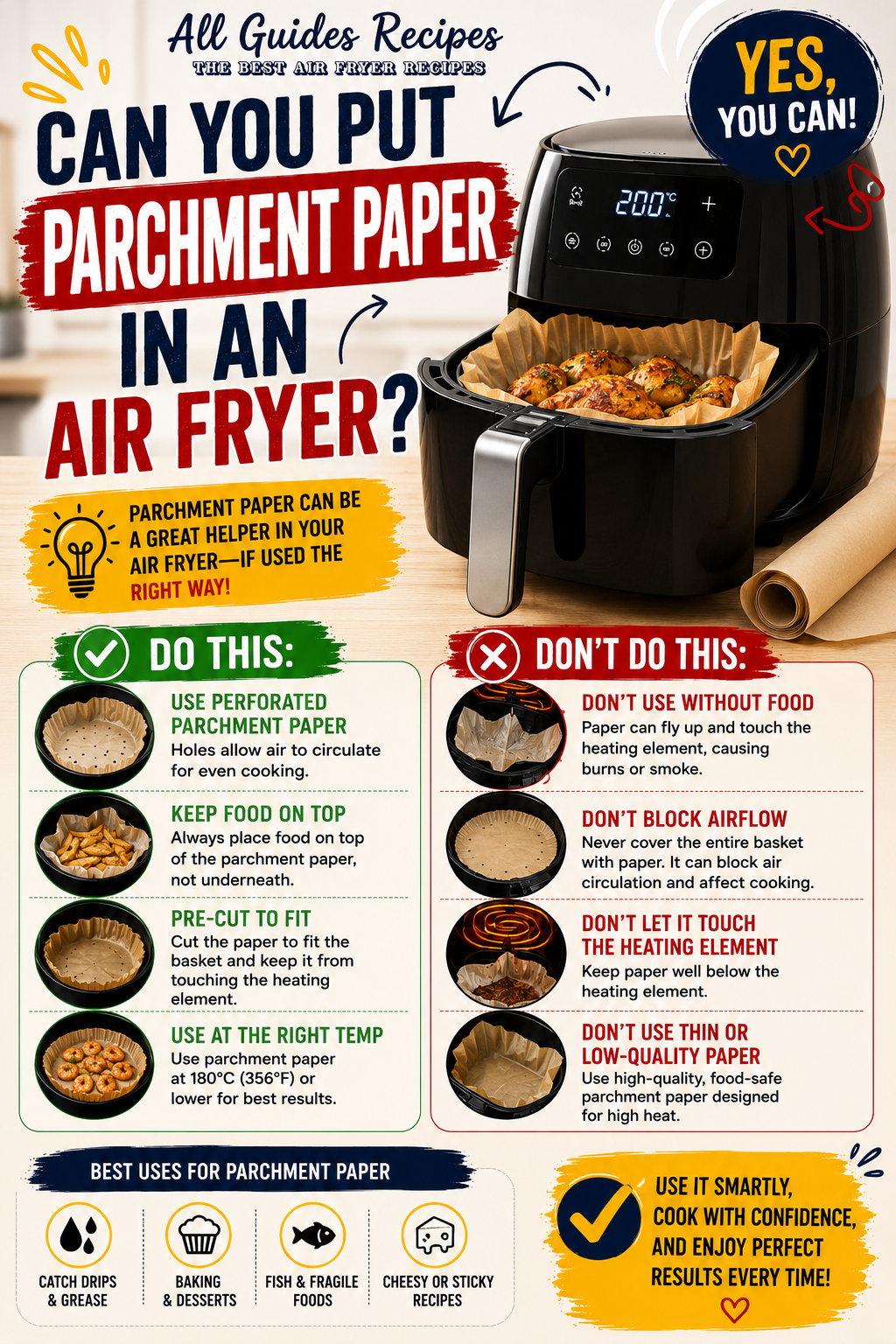
1. Perforated Air Fryer Parchment Paper
<AsyncImage query=”perforated parchment paper liners air fryer basket” aspectRatio=”5:4″ width=”100%” />
Perforated parchment liners are designed with holes that allow hot air to circulate. They can help reduce sticking and make cleanup easier.
Choose parchment specifically rated for air fryer use and suitable for your cooking temperature. Never place a loose liner in an empty, running or preheating air fryer, because the fan may lift it towards the heating element. The liner must be held down by food.
2. Silicone Air Fryer Liners
<AsyncImage query=”reusable silicone air fryer liner basket insert” aspectRatio=”5:4″ width=”100%” />
Reusable silicone liners can catch drips and reduce mess. They are useful for foods that release a lot of fat or sauce.
However, solid silicone liners can restrict airflow and may reduce crispiness. Choose a product designed for your air fryer, check its temperature rating, and make sure it fits without blocking vents or drainage areas.
3. Oven-Safe Dishes
<AsyncImage query=”small oven safe ceramic baking dish air fryer” aspectRatio=”5:4″ width=”100%” />
A small oven-safe dish made from a material approved for air fryer use can be helpful for casseroles, eggs, baked dips, or saucy foods.
Check that the dish fits comfortably inside the basket and leaves enough space for air to circulate. Never use a dish that isn’t rated for the temperatures involved.
4. Stainless Steel or Other Compatible Accessories
<AsyncImage query=”stainless steel air fryer baking tray accessory” aspectRatio=”5:4″ width=”100%” />
Some air fryers support stainless steel racks, trays, or other accessories. These can be useful for specific recipes, but they must be compatible with the appliance and suitable for its temperature range.
Avoid accessories that are too large or that obstruct the fan, heating element, or basket’s designed airflow.
Which Alternative Is Best?
| Option | Best use | Main consideration |
|---|---|---|
| Aluminium foil | Catching some drips and supporting delicate foods | Only use if the manufacturer permits it |
| Perforated parchment | Reducing sticking and simplifying cleanup | Must be secured by food and rated for air fryer use |
| Silicone liner | Reusable protection against drips | Can reduce airflow and crispiness |
| Oven-safe dish | Eggs, casseroles, and saucy recipes | Must fit and be rated for the appliance |
| Compatible metal rack | Elevating food or cooking certain recipes | Must be approved for the specific air fryer |
For everyday air frying, the simplest and often most effective option is to cook directly in the basket. This allows the appliance to circulate hot air as designed.
Considering Aluminum and Health
Aluminium is a naturally occurring element found in food, water, and the environment. People are exposed to small amounts through various everyday sources, including some cookware and food packaging.
Using aluminium foil in cooking is not automatically unsafe. However, the amount of aluminium that may transfer into food depends on factors such as temperature, cooking time, the food’s acidity, and salt content.
Does Aluminium Foil Release Aluminium Into Food?
Small amounts of aluminium can transfer from foil into food during cooking. The transfer may increase when foil comes into contact with acidic or salty foods, particularly under higher-temperature or longer cooking conditions.
For this reason, it’s sensible to avoid prolonged contact between aluminium foil and foods containing ingredients such as lemon juice, vinegar, tomatoes, or heavily salted sauces.
Is It Safe to Use Aluminium Foil in an Air Fryer?
When the air fryer manufacturer permits it and the foil is used correctly, occasional use is generally considered a practical cooking method. The main immediate safety concerns are usually improper placement, blocked airflow, and foil contacting the heating element.
If you want to reduce aluminium contact with food, you can use suitable parchment paper, a compatible oven-safe dish, or cook directly in the basket.
Does Aluminium Foil Cause Health Problems?
The presence of aluminium in food does not automatically mean it will cause harm. Health effects depend on the amount and form of exposure, among other factors.
Food-safety authorities set guidance and limits for aluminium exposure. For typical home cooking, using foil sensibly and avoiding unnecessary contact with acidic or very salty foods are reasonable precautions.
If you have a specific health concern, consult a qualified healthcare professional or a reliable food-safety authority rather than assuming that all aluminium cookware or foil use is dangerous.
FAQs
Can You Put Aluminium Foil in Any Air Fryer?
No. Many air fryers allow foil under certain conditions, but some manufacturers restrict or prohibit its use. Always check your specific model’s instruction manual before using foil.
Can Aluminium Foil Catch Fire in an Air Fryer?
Aluminium foil itself is not generally combustible at normal air fryer cooking temperatures, but improperly positioned foil can create a fire hazard. If it lifts into the heating element, it may cause dangerous contact or interfere with the appliance. Never use loose foil, and always follow the manufacturer’s instructions.
Can I Line the Entire Air Fryer Basket With Foil?
It’s generally best not to cover the entire basket. Doing so can block airflow, interfere with drainage, and lead to uneven cooking. Use only a small piece when needed and only if your manufacturer permits it.
Should the Shiny or Dull Side Face Up?
For normal household aluminium foil, the difference between the shiny and dull sides has no meaningful effect on cooking performance. Focus instead on using the foil safely, keeping it away from the heating element, and preserving airflow.
Can I Wrap Food Completely in Aluminium Foil?
Only do this if your recipe and air fryer manufacturer’s instructions allow it. Wrapping food tightly can limit the hot air’s direct contact with the surface, resulting in a softer texture rather than a crispy finish. The foil must not interfere with the appliance’s airflow or touch its heating element.
Can I Use Aluminium Foil When Cooking Chips?
It’s usually better to cook chips directly in the basket because they need good airflow to become crisp. Foil may reduce browning where it covers the chips and can obstruct the basket’s perforations. If your manufacturer permits foil, use it only when necessary and never cover the air passages.
Can I Put Foil Under Chicken or Fish?
Yes, if your air fryer manual allows it and the foil is positioned safely. Keep it secured beneath the food, avoid blocking airflow, and make sure it cannot lift towards the heating element. Cooking directly in the basket may give you a crispier surface.
Is Parchment Paper Safer Than Aluminium Foil?
Neither option is automatically safer in every situation. Both must be suitable for the appliance and used according to the manufacturer’s instructions. Parchment paper must not be allowed to lift towards the heating element, while foil must not block airflow or touch hot internal components.
Can I Put Foil in the Air Fryer While Preheating?
Never place loose foil in an empty air fryer while it is running or preheating. The fan can lift it towards the heating element. If foil is permitted, place it under food so it is held securely in position before cooking.
Does Foil Make Food Cook Faster?
Not necessarily. Foil can alter how heat reaches the food, but covering too much of the basket may actually slow cooking or make it uneven. For the best results, follow the recipe and allow sufficient airflow around the food.
What Is the Best Way to Keep an Air Fryer Clean Without Foil?
Let the appliance cool completely, then remove the basket and tray according to the manufacturer’s instructions. Wash them with warm water and suitable dish soap, using a non-abrasive sponge if required. Avoid immersing electrical components or using harsh cleaning tools on non-stick surfaces.
Aluminium foil can be useful in an air fryer when used carefully, but it’s not essential for most recipes. Check your appliance’s instructions, keep foil away from the heating element, and never block the airflow. When crispness is the priority, cooking directly in the basket is often the best choice.